How much does it cost to knock down a wall? In Ireland, most homeowners pay between €800 and €3,000 to remove a standard non-load-bearing wall. If the wall is load bearing, expect to pay €2,500 to €7,000 or more once you add a structural engineer, a steel beam, and building compliance costs.
Knocking through a wall is one of the most popular home improvements in Cork right now. It opens up dark, boxy rooms and creates the bright, open-plan living space so many families want. It is also far cheaper than building an extension. In this guide, the team at Cork Demolitions breaks down every cost involved, so you know exactly what to budget before the sledgehammer comes out.
Average Cost to Knock Down a Wall in Ireland (2026)
Here is a quick look at typical prices across Ireland this year:
| Type of Job | Typical Cost |
|---|---|
| Non-load-bearing stud wall | €800–€1,500 |
| Non-load-bearing block wall | €1,200–€3,000 |
| Load bearing wall (single storey) | €2,500–€5,000 |
| Load bearing wall (two storeys above) | €4,000–€7,000+ |
| Structural engineer fees | €400–€900 |
| Steel beam (supply and fit) | €200–€300 per metre |
| Waste removal / skip hire | €250–€450 |
Every home is different, so treat these figures as a guide. The only way to get an exact price is to have a professional inspect the wall in person.
The Big Question: Is the Wall Load Bearing?
Nothing affects your final bill more than whether the wall is load bearing.
A non-load-bearing wall, often called a partition wall, only divides a room. It carries no weight from above. These walls can usually be removed in a day with minimal fuss and minimal cost.
A load bearing wall is a different story. It supports the floors, walls, or roof above it. Remove it without proper support and you risk cracks, sagging floors, or even partial collapse. That is why a load bearing wall must be replaced with a steel beam, often called an RSJ, sized by a qualified structural engineer.
Never guess. If there is any doubt about whether your wall is load bearing, get a professional assessment first. It is a small cost that protects the biggest investment you own.
What You Are Actually Paying For
When you get a quote to knock down a wall, the price usually covers several separate jobs:
Structural engineer fees (€400–€900). The engineer confirms whether the wall is structural and calculates the exact size of steel beam needed. Their calculations are also required for building control compliance.
Steel beam supply and installation (€600–€2,000). The beam itself is priced per metre, so a wider opening costs more. Padstones, temporary props, and fitting labour are included in this stage.
Demolition labour (€500–€1,500). This covers propping the structure, taking the wall down safely, and controlling dust throughout the job.
Waste removal (€250–€450). A block wall produces a surprising amount of rubble. Most quotes include a skip, but always check.
Making good (€400–€1,200). Once the wall is gone, the ceiling and side walls need to be plastered, the floor levelled, and the joint between the two rooms tidied up ready for painting.
6 Factors That Affect the Cost to Knock Down a Wall
- Size of the opening. A single doorway-width opening is much cheaper than removing a full 4-metre wall. Longer openings need longer, heavier steel beams.
- Wall material. Timber stud walls are quick to strip out. Solid block or brick walls take more labour, heavier tools, and more skips.
- Pipes and wiring. Many walls hide radiators, sockets, switches, or water pipes. Moving a radiator typically costs €250 to €400, while relocating sockets runs €100 to €200 each.
- Number of floors above. A load bearing wall with two storeys above it needs a stronger beam and more temporary support, which pushes up the price.
- Access. Tight terraced streets, upstairs walls, or limited parking for skips all add time, and time adds cost.
- Finishing level. A simple plaster finish is inexpensive. Matching hardwood floors across the new opening or boxing in the steel beam adds to the final bill.
How to Tell If a Wall Is Load Bearing
There are a few clues you can check yourself:
- All external walls are load bearing.
- Walls that run perpendicular to the floor joists above are often structural.
- Walls that sit directly above another wall or beam below usually carry weight.
- Solid masonry walls are more likely to be structural than lightweight stud walls.
These signs are only indicators. Homes in Cork range from Victorian terraces to modern estates, and each one is built differently. Always have a structural engineer or experienced demolition contractor confirm before any work starts.
What Does the Job Involve? Step by Step
- Survey. The wall is inspected and confirmed as load bearing or not.
- Engineer’s calculations. For structural walls, the engineer specifies the steel beam.
- Preparation. Furniture is cleared, dust screens go up, and any electrics or plumbing in the wall are safely disconnected.
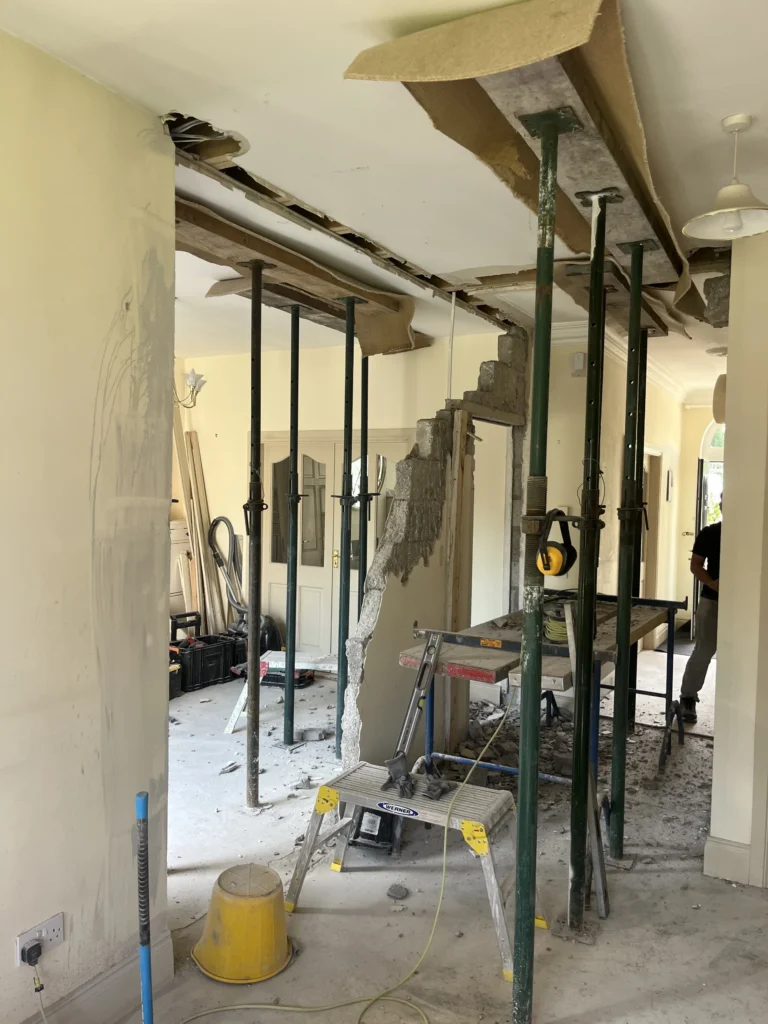
- Temporary props. Acrow props support the structure above while the wall comes out.
- Demolition. The wall is taken down in a controlled way.
- Beam installation. The steel beam is lifted into place on padstones and checked.
- Making good and clean-up. Plastering, floor repairs, and full rubble removal finish the job.
Most wall removals take two to four days from start to finish.
How to Keep Costs Down
- Get at least three written quotes and compare exactly what each includes.
- Clear the room yourself before the crew arrives.
- Combine the wall removal with other planned works to share labour and skip costs.
- Keep the opening slightly smaller where the design allows, since a shorter steel beam costs less.
- Do the painting and decorating yourself once the plaster has dried.
The one place you should never cut costs is the structural work itself. A cheap job done without proper calculations can cost tens of thousands to put right.
Frequently Asked Questions
How much does it cost to knock down a wall between a kitchen and living room? This is the most common knock-through in Irish homes. Budget €2,500 to €6,000 if the wall is load bearing, including the steel beam and making good.
Do I need planning permission? Usually not for internal walls. However, structural work must comply with Building Regulations, and listed or protected structures have extra rules.
Can I knock down a wall myself? A stud partition wall may be a DIY job for a confident homeowner. A load bearing wall should never be removed without professional support. The risk is simply too high.
How long does it take? Non-load-bearing walls often come down in a day. Structural removals typically take two to four days including the beam and plastering.
Get an Exact Price for Your Wall Removal in Cork
So, how much does it cost to knock down a wall? Anywhere from €800 for a simple partition to €7,000+ for a large structural opening. The honest answer for your home starts with a proper survey.
Cork Demolitions provides free, no-obligation quotes across Cork City and County. We handle everything from the structural engineer’s report to the steel beam, demolition, and full clean-up. Contact us today and find out exactly what your project will cost.